
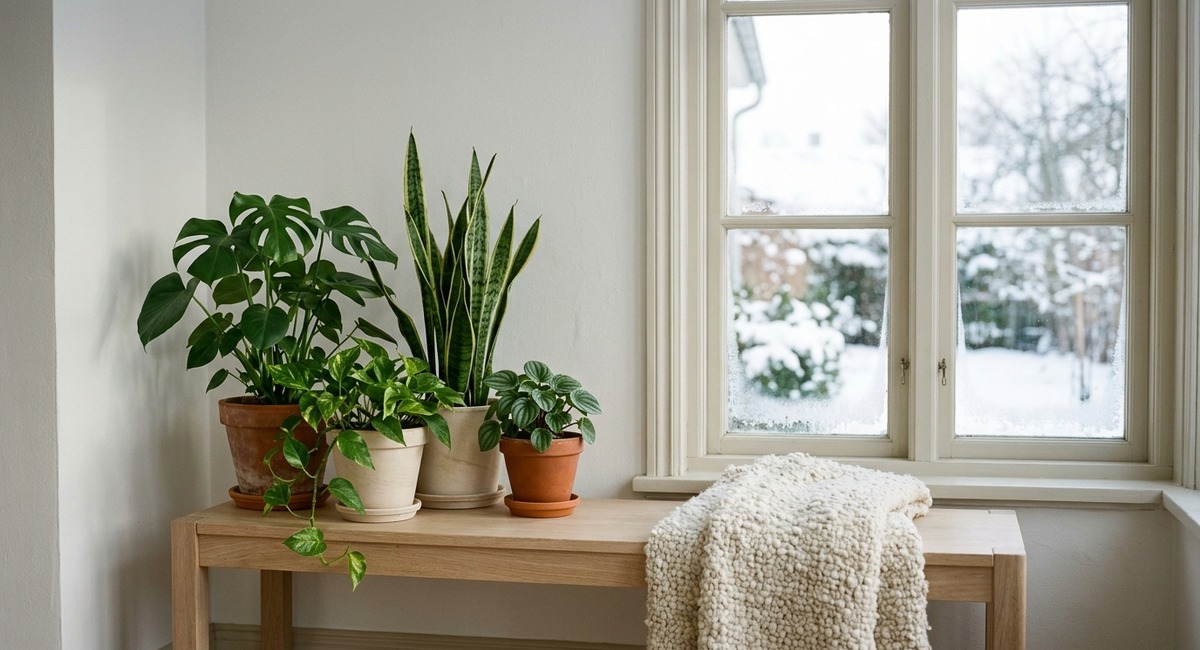
How to Care for Houseplants in Winter: A Step-by-Step Guide for Beginners
Last updated: November 27, 2026
Disclaimer:I only recommend products I would use myself. This post contains affiliate links, and as an Amazon Associate, I earn from qualifying purchases at no additional cost to you.
The first winter I had a real plant collection, I nearly killed half of it with kindness. I kept watering every Sunday like it was still July, the radiator was blasting, and by January my fiddle leaf fig had dropped leaves all over the rug.
That’s the good news about winter houseplant care: it’s mostly about doing less, and doing it a little differently. This guide is for anyone with a handful of green friends and a dry, dim, heated home — beginners especially. Follow the six steps below and your plants should look just as good in March as they did in October.
Why Winter Houseplant Care Matters
Most houseplants are tropical. In winter, three things change at once: days get short, indoor air gets very dry once the heat is on, and temperatures swing near windows and vents. Plants respond by slowing down, almost like a nap.
Getting this right matters because:
- You stop losing plants to root rot, the number one winter killer, which comes from watering a resting plant too much.
- You save money. Replacing a large monstera costs far more than a moisture meter and a pebble tray.
- You avoid the spring scramble of cutting back leggy, yellowed stems and treating pests that moved in over the cold months.

What You Need for Winter Plant Care
You don’t need all of this. Start with the first two.
- A soil moisture meter (or just your finger)
- A watering can with a long spout for slow, precise watering
- A hygrometer to check your room’s humidity
- A humidifier or pebble trays
- One or two grow lights for dark corners
- A soft cloth, yellow sticky traps and a plant caddy for moving heavy pots
Step 1: Move Your Plants Closer to the Light
What to do: Shift plants to your brightest window — usually south- or west-facing — and keep them within a few feet of the glass.
Why it matters: Light drives everything. With less of it, a plant can’t use water or food, so every other step depends on this one.
Tip: If you have no good window, a full-spectrum grow light 6–12 inches above the plant for 10–12 hours a day makes a huge difference. I put mine on a timer so I never forget.
What you’ll notice: Within two weeks, new leaves stop coming in tiny and pale, and stems stop stretching toward the window.
Winter light helpers
Bring the Sun Indoors
Dual Head Clip-On Grow Light — two bendable heads mean one lamp can cover a shelf of herbs or a single big monstera.
Check price on Amazon →Dimmable Clip Plant Lamp with Timer — set it once and it switches itself on and off, which is exactly what forgetful plant parents need.
Check price on Amazon →Rolling Plant Caddy — lets you glide a heavy pot to the sunny window without hurting your back (or your floors).
Check price on Amazon →Step 2: Water Less (and Check Before You Pour)
What to do: Throw out the watering schedule. Instead, push a finger two inches into the soil or use a moisture meter, and only water when it reads dry. For most plants that means every two to three weeks instead of weekly. Use room-temperature water and let it drain fully.
Why it matters: A resting plant drinks slowly. Wet soil that sits for days suffocates roots and invites rot and fungus gnats.
Common mistake: Watering a droopy plant without checking. In winter, drooping is often a sign of too much water, not too little.
What you’ll notice: Firmer stems, no more yellow lower leaves and no sour smell from the pot.
Step 3: Raise the Humidity
What to do: Check your room with a hygrometer. Most tropical plants like 40–60% humidity, and a heated home in January can drop well below that. Run a humidifier near your plant group, or set pots on pebble trays filled with water just below the top of the stones.
Why it matters: Dry air pulls moisture out of leaves faster than roots can replace it. That’s where crispy brown tips and curling edges come from.
Tip: Grouping plants together creates a little humid microclimate. Misting feels nice but only helps for a few minutes, so don’t rely on it.
What you’ll notice: New leaves unfurl smoothly instead of tearing, and calatheas stop curling at the edges.
Beat the dry winter air
My Humidity Toolkit
Plant Humidifier with Humidity Control — the big tank and flexible hose let you aim mist right at a cluster of tropicals.
Check price on Amazon →Oval Humidity Trays with Pebbles — a quiet, no-electricity way to give one or two thirsty plants a little extra moisture.
Check price on Amazon →Digital Hygrometer Thermometer — tiny, cheap and the fastest way to see whether your plant corner is too dry or too cold.
Check price on Amazon →Step 4: Keep Plants Away From Drafts and Heat
What to do: Keep plants at least a few feet from radiators, heating vents, fireplaces and drafty doors. Pull them back from the glass on freezing nights, and never let leaves touch a cold window.
Why it matters: Most houseplants are happiest between 60 and 75°F. A blast of hot, dry air or a cold draft below about 50°F shocks them, and the damage shows up a week later.
Common mistake: Tucking a plant behind closed curtains at night. That pocket between the curtain and the glass can get surprisingly cold.
What you’ll notice: No more sudden leaf drop, and no black, mushy patches where leaves touched the window.
Step 5: Pause Fertilizer and Repotting
What to do: Stop feeding from about November until new growth appears in late February or March. Save repotting for spring too, unless roots are literally pushing the plant out of its pot.
Why it matters: A resting plant can’t use the nutrients, so fertilizer salts build up in the soil and burn the roots. Repotting now forces a slow plant to recover from stress with too little light.
Tip: Mark “start feeding” on your calendar for the first week of March so you remember when the plants wake up.
What you’ll notice: No white crust on the soil surface and no brown, burnt leaf edges.
Step 6: Clean Leaves and Watch for Pests
What to do: Once a month, wipe big leaves with a soft damp cloth and rinse smaller plants in a lukewarm shower. While you’re at it, check the undersides of leaves and stems. Stick a yellow sticky trap in any pot where you see tiny flies.
Why it matters: Dust blocks the little light plants get in winter. Warm, dry rooms are also a dream for spider mites, and damp soil breeds fungus gnats.
Common mistake: Ignoring “just a few” gnats. A few in December becomes a cloud by February.
What you’ll notice: Shiny leaves, fewer flying bugs and early warning before a small problem spreads to the whole shelf.
Water smarter, stop the gnats
My Everyday Winter Care Tools
Soil Moisture Meter — no batteries, no guessing; it tells you when the roots are really dry.
Check price on Amazon →Stainless Steel Long-Spout Watering Can — pours slowly right at the soil, and it’s pretty enough to leave on the shelf.
Check price on Amazon →Yellow Sticky Gnat Traps — a simple, non-spray way to catch fungus gnats before they multiply.
Check price on Amazon →Your Winter Houseplant Checklist
The whole guide in two minutes a week.
- Every week: check soil moisture before watering; turn each pot a quarter turn so it grows evenly.
- Every two weeks: glance at the hygrometer and refill pebble trays or the humidifier.
- Every month: wipe leaves, check undersides for pests, swap sticky traps.
- On cold nights: pull plants back from the glass.
- First week of March: start feeding again and plan any repotting.
Tips for Success
- Start with your problem plant. If one plant always struggles in winter, give it the best spot and the grow light first.
- Learn which plants nap hardest. Succulents, cacti and snake plants barely need water until spring, while ferns and calatheas want more humidity than water. Pothos and ZZ plants are the easiest of all.
- Group by needs. Put humidity lovers together and keep succulents in the driest, brightest spot. Here’s how I group indoor plants so they look good, too.
Common Winter Mistakes to Avoid
- Watering on a schedule. Plants don’t read calendars. Check the soil every time.
- Using cold tap water. Icy water shocks roots. Fill your can the night before so it reaches room temperature.
- Panicking at every yellow leaf. If you’re unsure what a symptom means, my guide to the signs your indoor plant is unhealthy helps you tell a real problem from normal winter slowdown.
Best practice: change one thing at a time and wait two weeks before judging. Plants answer slowly in winter.
Keep reading
You Might Also Love
Winter Houseplant Care FAQ
How long does it take plants to adjust to winter care? Give them two to three weeks. You’ll usually see the first signs — firmer stems, fewer yellow leaves — within that time, but real new growth waits for longer days.
Is winter houseplant care beginner-friendly? Very. Most of it is doing less: watering less often, skipping fertilizer and leaving repotting for spring. If you can check soil with a finger, you can do this.
What is the most important step? Watering only when the soil is dry. Overwatering kills more houseplants in winter than cold, pests and low light combined.
Conclusion
Winter houseplant care isn’t about fancy gear. It’s light, a lighter hand with the watering can, a bit more moisture in the air and a safe spot away from the heater. Start with Steps 1 and 2 this week, add the rest as you go, and by March you’ll be watching new leaves unroll.
If this guide helped, save it to your plant care board on Pinterest so it’s right there the next time the heat clicks on.
Keep Reading
- Breathe Better Tonight: 6 Low-Maintenance Plants for a Dreamy, Restful Bedroom
- How to Turn Your Indoor Plants into Living Art
- How Often to Water Plants in Spring (Indoor & Outdoor Simple Guide)
- 10 Beautiful Indoor Plants in Water for Glass Vases + Jars (Simple & Aesthetic)
Free download
Get the Afrohemian Home Starter Guide
Our free 11-page guide, sent straight to your inbox.